
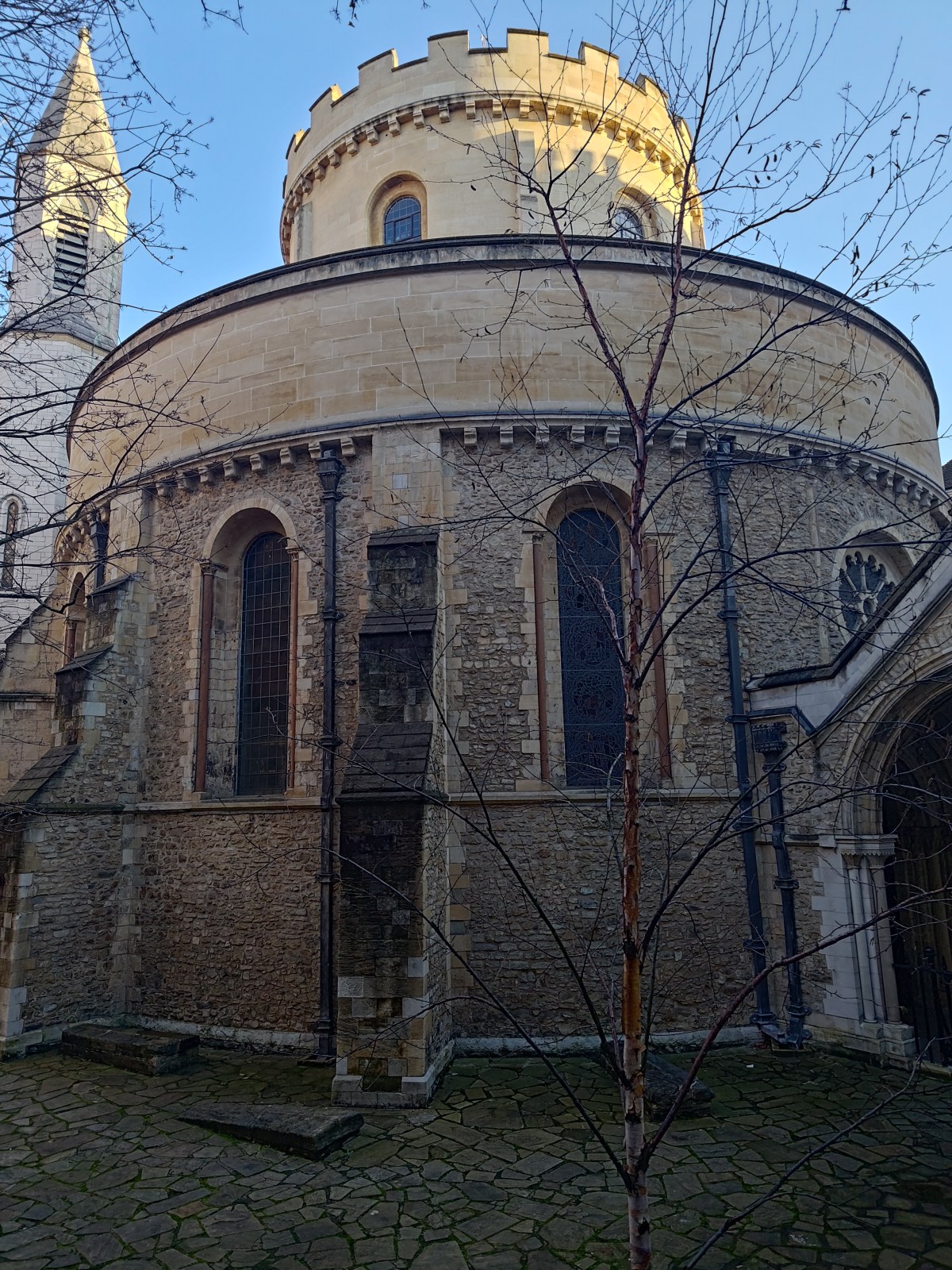
The other day I had the pleasure of ducking into the Temple Church here in London. I’ve been by a number of times, but never actually in, and so I was looking forward to being a little history nerd in a cool old space. Obviously, I am very aware of the fact that the Temple was severely damaged by the blitz, but there’s always something to see in a place like this, so in I went.
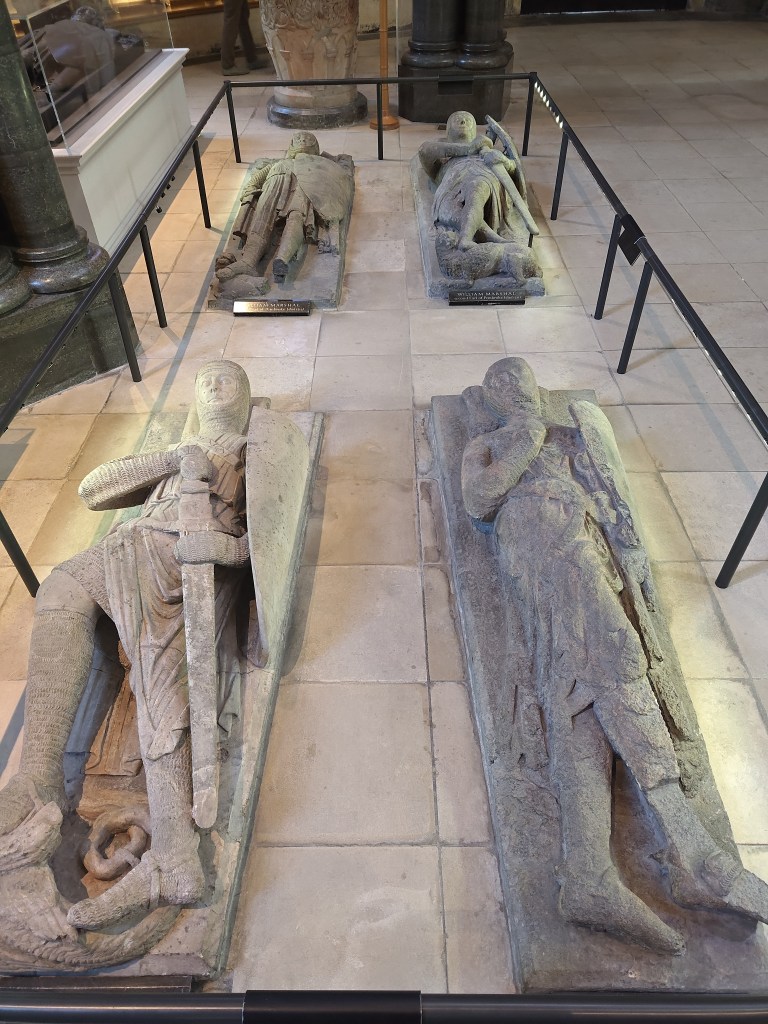
For me, in the church the stars of the show are the gorgeous medieval tombs. Many of the Earls of Pembroke are chilling here awaiting the day of judgement and their tombs are absolutely popping. I love a thirteenth century moment, and these guys did not disappoint.
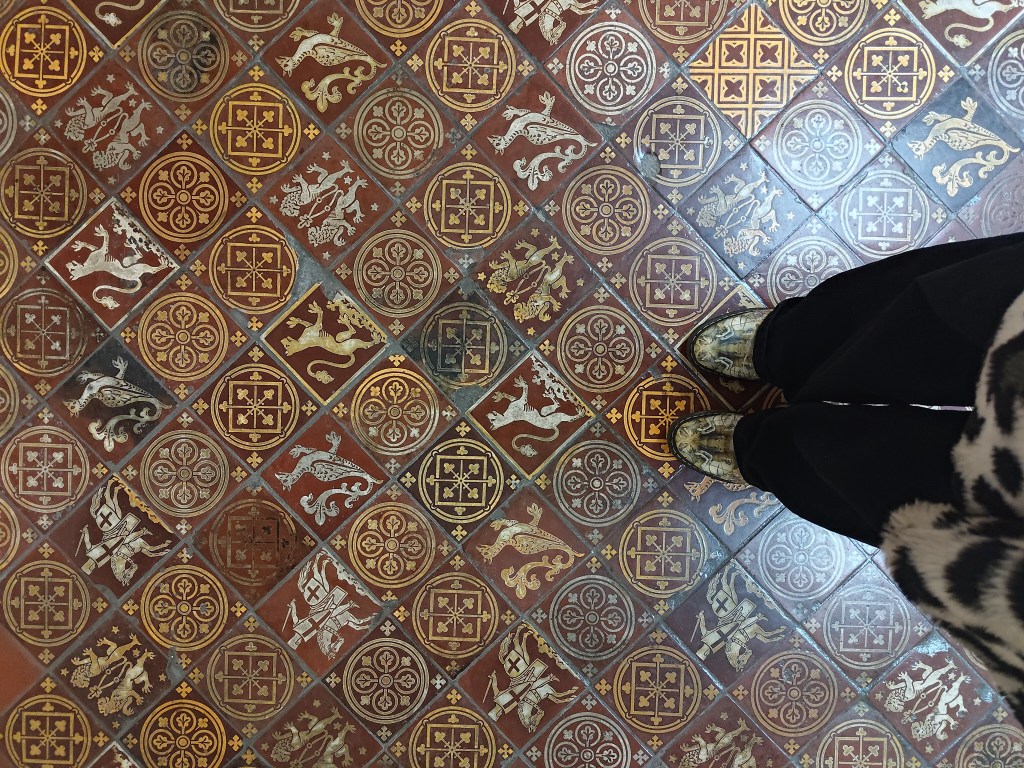
I also liked the new medieval-esque tiles that were installed in the upper gallery. I like how Victorians were into medieval stuff and how Sydney Smirke (1798-1877) (name alert) and Decimus Burton (1800-1881) attempted to wrestle the church back from Christopher Wren (1632-1723), who decided he knew better than medieval people for absolutely no reason back in the seventeenth century. (It wasn’t damaged in the fire Chris!!! Leave her alone!!!!!!!!)
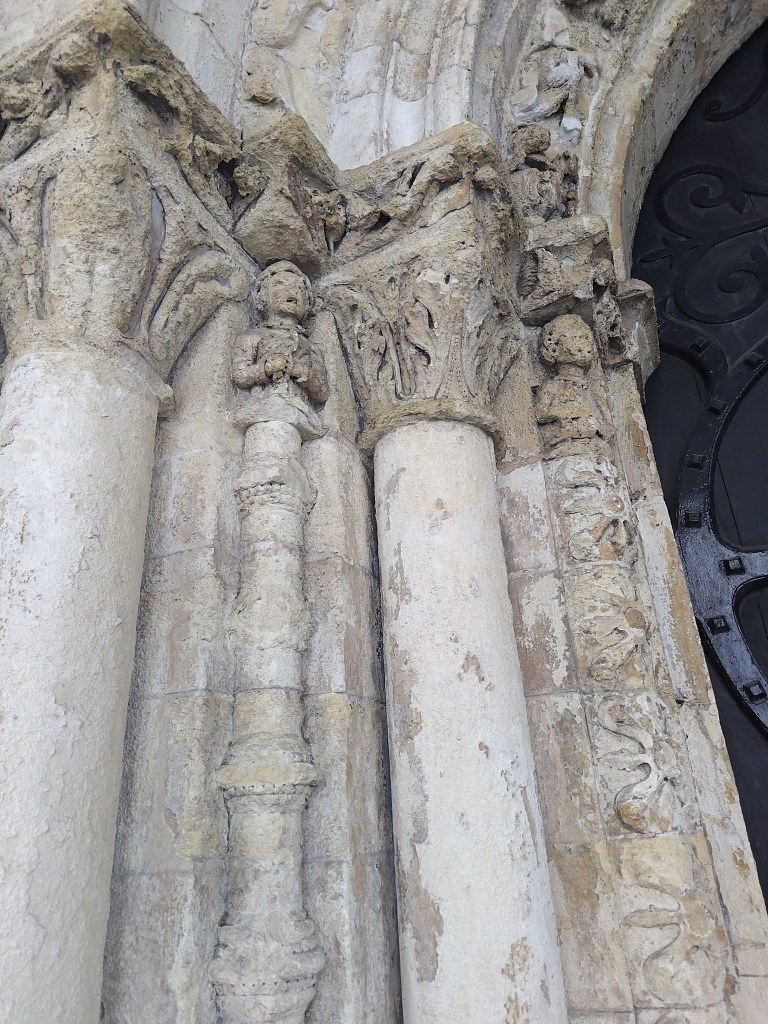
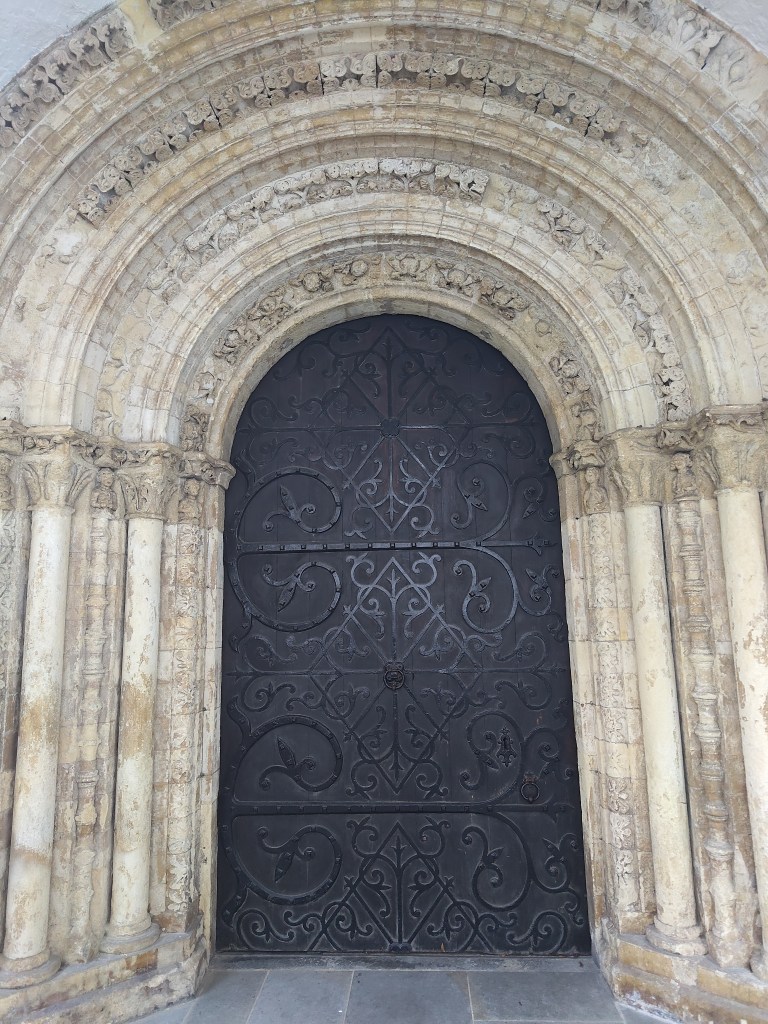
I also really liked the medieval carvings in the porch over the door.
So, there are a lot of good things, those are wonderful! And I really recommend going to check them out! However, that’s not much of a blog post, and also since I am such a hater, I don’t usually write up things just cuz I think they are cute. (Hey, at least I know myself, right?) The reason I decided to sit down and type around two thousand words because I was absolutely astounded [derogatory] to see that the main part of the circular part of the church was given over to a big exhibition on … Magna Carta.
Now if you are a regular you already know that the whole Magna Carta thing is overblown PR. But here we have an excellent example of how that PR exercise just keeps on going.
There’s almost no reason to be talking about Magna Carta and the Temple. In fact, it would make more sense to talk about how Magna Carta is nonsense if you were talking about the church’s history. See, they decided it was time to wank off about this document because of the tombs of the aforesaid Earls of Pembroke. One of said Earls was William Marshal (c. 1146 – 1219), the first Earl of Pembroke.
There’s a pretty fun, and probably apocryphal story, about young William in a poem/biography written about him which is probably the most fun thing about his life. His dad was on the right side of the Matilda/Stephen issue during the Anarchy. In an attempt to try to get him to surrender his castle, Stephen (c. 1092-1154) had got hold of young William and threatened to hang him. In response to this William’s dad made a joke about his cock and balls, saying “I still have the hammer and the anvil with which to forge still more and better sons.” Nice. This made Stephen load William into a fucking trebuchet and pretend he was gonna hurl him at the castle.[1] He did not. This remains a fun lil’ story, if dubious. I am not above repeating it even if I think it’s not true.
ANYWAY! What we do know for sure is that William was one of those guys who had made a name for himself by just sorta hanging around the crown. He hadn’t stood to inherit much in the way of land, but he made friends with Young King Henry (1155-1183) (Henry II (1133-1189) and Eleanor of Aquitaine’s (c.1124-1204) eldest son) while he was running around on the tournament circuit. William supported Henry when he led a rebellion against his dad, which is a sweet thing to do. This friendship lasted until about 1183 when it was found that William may or may not have been banging Margaret of France (1158-1197) who was married to the Young Henry.[2] They fell out, and only made up on Young Henry’s deathbed, where William agreed to go on crusade in Henry’s place, what with the dying and all.[3]
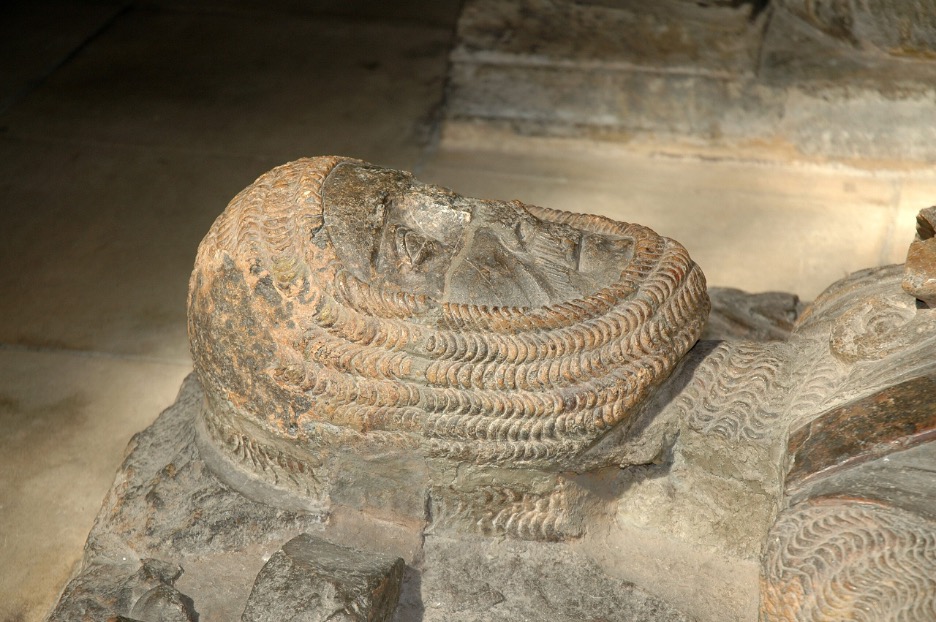
When William returned, he managed to make his way into King Henry II’s retinue, because apparently no one was taking the old rebellions seriously anymore. He seems to have impressed the old king enough to be given the lands in Cumbria and – badabing dadaboom – he was a wealthy landowner. Great job William.
Having established himself at court, our good friend William wasn’t about to stop just because Henry II died. He attached himself to Richard the Lionheart (1157-1199) right quick as soon as he came to power, and indeed was put on the council of regency when Dick took off for the holy land in 1190. He … also immediately began to get real pally with John, the future King John (1166-1216). Now I am not saying Robin Hood is some sort of documentary, but the fact that John was fucking about while his brother was getting arrested in the Holy Roman Empire or whatever is absolutely the case. John was doing stuff like beefing with William de Longchamp (d. 1197) who was the Bishop of Ely and also Richard’s justiciar which was essentially like his prime minister at the time. And when I say “beef” I mean he kicked him out of office. Our William thought this was pretty chill and went with it, until it turned out Richard didn’t like it, at which point he was like “Well I did help expel him, but I was shaking my head the whole time, so everyone knew I disagreed.” That typa move. This paid off as Richard seemed not to notice and on his deathbed, he made William the custodian of Rouen, which is a pretty sweet gig.
If you are enjoying this post, why not support the blog by subscribing to the Patreon, from as little as £ 1 per month? It keeps the blog going, and you also get extra content. If not, that is chill too.
So, now John is on the throne and William, having established himself as a royal dickrider par excellence kept doing what he did best. Were there spats with John? Sure. But he also did shit like do homage in John’s place to the King of France so John wouldn’t have to embarrass himself. He blocked the Young Henry’s kids from taking the throne.[4] Things of this nature.
Anyway, fast forward to 1215 and everyone fucking hates John’s guts. You have France in open hostility with him and he is fighting and losing lots of battles, as well as losing territory. The Irish are kicking off. The Barons are tired of paying for a bunch of wars that have nothing to do with them, and they are definitely mad about fishing weirs. John arrives home from France bedraggled and with a sore little bottom from all the spanking, and the Barons are in revolt. This is embarrassing.
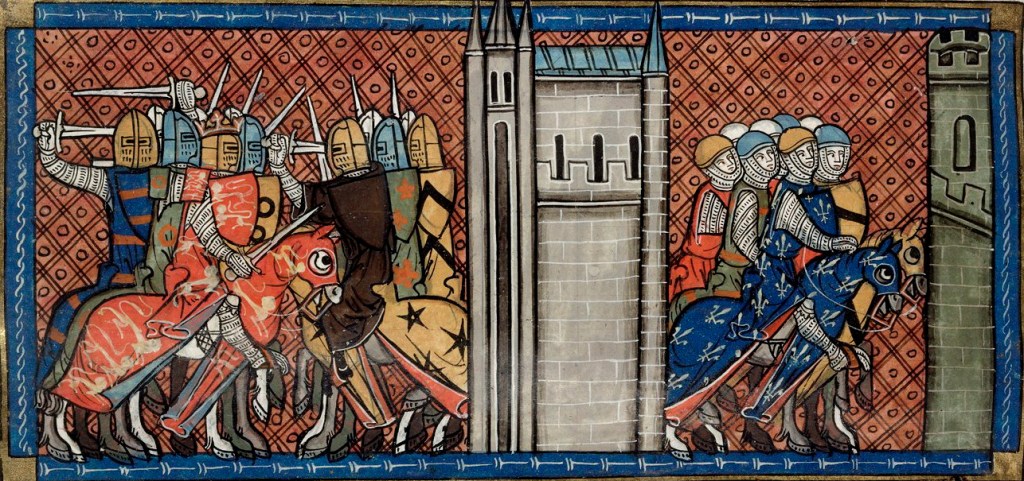
Someone had to sort all this out, and you know who it was? William Fucking Marshall, that’s who. He negotiated with the barons and managed to get the little documents all in order.
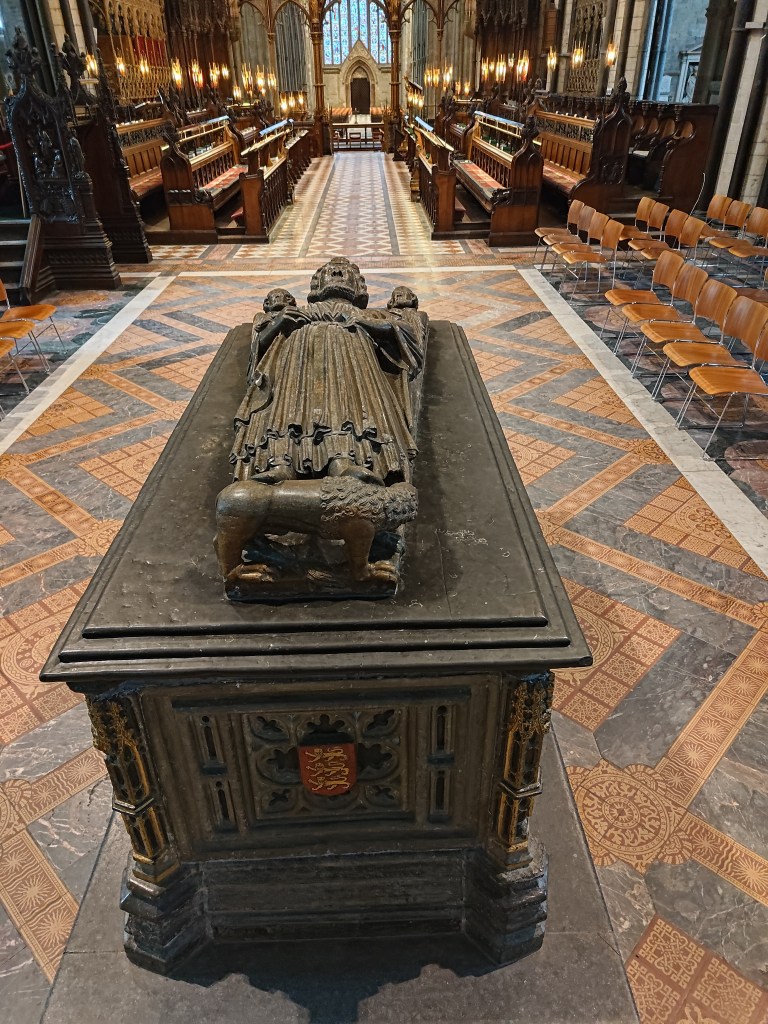
But here’s the thing about Magna Carta – it didn’t stop anything from kicking off, like at all. People like to forget that the First Baron’s War started in 1215, after Magna Carta was written cuz John was like “hee hee never mind”. So, there’s two more years of war and when everyone else is pretty much in open revolt against John, William Marshall absolutely is not. When John dies of dysentery it’s William who is at his bedside and who gets entrusted to make sure that Henry (1207-1272), his son, would become king. He also sees that John gets buried in Worcester Cathedral, which I also happened to see the other week. It’s a pretty cool tomb too. Check it out.
Anyway, William acted as regent for little Henry III until his death in 1219 and subsequent burial in the temple church, where I ran into him.
So given all of this, it is super fucking weird to have a big old exhibition all about how great Magna Carta is, because William Marshall is buried in this church. Hell, even further it’s like spitting in William’s face. He worked his entire life to specifically big up the royal cause. It was his entire thing. And then he dies, and you make a big exhibition like “LOL take the L William” next to his tomb?? Weird!
Now far be it from me to be like “someone please think of the royal bootlickers!” That’s not what I mean. Personally, I say a pox on the houses of every one of the bastards involved in the Barons’ War. All that death and bloodshed because someone told you, a fancy noble lad, what to do and you are mad. Why are we killing the workers of the kingdom and destroying their crops over your little disagreement? I do not find this to be hopeful, noble, or notable.
Indeed, I do not find Magna Carta to be hopeful, noble, or notable for the same reasons. It was given a lot of weight and importance several hundred years later when a bunch of other utter bastards – the Americans – wanted to pay less in tax while holding slaves. It’s not exactly the sort of legacy that I would like to involve myself with.
But here’s the thing about myths and how they are passed down – people want an easy story that makes them feel good about themselves. It feels good to pretend you would have had special rights if you were alive in medieval England. (You would not have. You would have been an unfree peasant, dying in a ditch for the rights of your landlord.) It feels good to pretend that if someone was involved with Magna Carta then they were somehow involved in the “right” side of that argument. It’s easy to repeat the story everyone knows. Conventional wisdom says you would have to be brave to tell the actual story of William Marshall, a rich dude who made his fortune by kissing up to some of the worst people who ever lived. And then maybe tourists won’t come.
But I just don’t think that’s right.
I think regular people are in fact really smart and can, actually, handle how history played out. They just aren’t offered the real story very often, so they don’t have the chance. And they are never going to have the chance if people don’t start taking chances and presenting it!
Further, I think that this is a real missed opportunity to do some cool history, not because we need to get into the weeds with William Marshall but because, um, this is the fucking Temple??? And the Knights Templar have an incredibly interesting and political history????
Why oh why are we wasting our time with old hat ridiculous retellings about Magna Carta when you could tell the history of the Temple!
Talk about how the Knights Templar build all their churches to look like the Holy Sepulcher in Jerusalem! Talk about how medieval people love them because they see them as bodyguards who will helps them go on pilgrimage to Jerusalem one day![5] Talk about how, failing that, people went into the Temple in London and pretended really hard that they were in Jerusalem, creating an interconnected imaginary community![6] Talk about the repression of the order in the fourteenth century and how the Temple was given over to the Knights Hospitaler! This is incredibly interesting stuff and frankly, it’s probably why people came!
We don’t need to keep going over a storybook idea of history where everyone was having a nice time, and the rich have everyone’s best interests at heart and are able to secure rights for people. They didn’t and didn’t. We are living in a time when ordinary people are more than able to understand that there aren’t grownups coming to save them. Give them the dirty political history. Tell them how to follow the money and explain why we tell the stories we do.
If we don’t tell the real stories of the Middle Ages, it’s not the fault of normal people when they digest and regurgitate pablum. So, we have to stop telling boring comfortable lies about the beneficence of the rich and powerful. We need to be braver about the stories we tell, and we need to trust that people will come along with us when they do. Real people are cool and smart, just like they were in the medieval period. Make an exhibition about that.
[1] Paul Meyer, L’Histoire de Guillaume le Maréchal, comte de Striguil et de Pembroke, régent d’Angleterre de 1216 à 1219, (Paris: Librairie Renouard, H. Laurens, successeur, 1891), p. 11.
[2] Thomas Asbridge, The Greatest Knight: The Remarkable Life of William Marshal, Power Behind Five English Thrones, (London: Simon and Schuster, 2015), pp. 140-146.
[3] Ibid., p. 163.
[4] Dan Jones, The Plantagenets: The Warrior Kings and Queens Who Made England (London: Penguin Books, 2014), pp. 149–150.
[5] Euan Beveridge, and Kevin O’Gorman, “The crusades, the knights templar, and hospitaller: A combination of religion, war, pilgrimage, and tourism enablers”, in, Tourism and war, (London: Routledge, 2013), pp. 39-48.
[6] Kyla Helena Drzazgowski, Imagined pilgrimage in late medieval England. PhD Dissertation. University of British Columbia, 2024.
For more on why Magna Carta is a scam, see:
Support the blog by subscribing to the Patreon, from as little as £ 1 per month! It’s the cool thing to do!
My book, The Once And Future Sex: Going Medieval on Women’s Roles in Society, is out now.

© Eleanor Janega, 2025

 Going Medieval
Really? The American Revolution was about “not wanting to pay taxes while holding slaves”?
How simplistic is THAT?
Many of the slave-holding “aristocrats” were on the BRITISH side of that war. Many of them fled the US afterward & went, either back to Britain, or to another British-held colony.
BTW, the Brits were slave-holders at that period of time AS WELL.
It was about REPRESENTATION. “No taxation without representation”. A cry many of us still have, especially with the current bunch of jerks running the country.
I love your blog. But when it comes to the Americans, get your facts straight. Not all of us are uneducated dweebs who voted for the orange monster.
LikeLike
“And, no! I cannot take a joke! Not at all! I am a good person. And modest about it!”
LikeLike
Nice work.
I may have something to say in agreement, but it’s coming out smart-stupid right now, and I hate trying to appear clever, but… us homo sapiens: why do we suck so much and so much of the time. especially when in a group?
LikeLike