

I’m not really on twitter that much anymore because of all the generalised unpleasantness. I mostly go to let people know I have done something that they can go read, watch, or listen to, and then I scuttle away to fritter my time on other useless pursuits.
And yet, at times there is a post so ridiculous, so incredibly stupid, that it goes up like a bat signal for me specifically, and all my friends that are still on yell at me until I come look at it. The other day there was one such case, and I was pulled out of retirement to gaze upon it in horror.
Here it is:

Now this is hilarious for any number of reasons, the first of which is that everyone who writes this stuff seems to be of the opinion that no one before this very moment ever had sex for fun. This would of course be news to the medieval Church who spent a thousand years or so absolutely begging everyone to please knock off all the sex and only do that for having babies. I’ve already written about that. A lot, so we don’t need to go into it.
However, this particular post also has several interesting aspects to it, which are funnier than the played out “surely no one ever banged before me” trope. First of which is the specific naming of peasants here as being uniquely unable to understand the concept of being slutty.
Here’s the thing about being a big old slut (which I mean in the positive, reclaimed sense, of course): that stuff is for THE WORKERS of the world. Sexual continence? That’s bourgeoise behaviour, my friends.
We see the idea that the upper classes are better able to control their sexuality even in the ancient period. Enemies of the blog Plato (c. 427-348 BCE) and Aristotle (384-322 BCE) both agreed that men who were into sex were weak. According to them, if you were thinking about how sex is both cool and fun you wouldn’t be doing manly shit like … owning enslaved people I guess? Spending all your time moralising about how people shouldn’t like sex? You know, manly stuff![1]

But, more than manly in general what they are speaking about here is specifically patrician. Because no one cares what the enslaved people or the commoners are doing. These are specific prohibitions when one is a fancy lad, and the same thing tends to apply to people hand wringing about women in the Roman era. There we see a lot of laws specifically about how fancy Roman women cannot have a bunch of sex. And this pretty much follows the rules of what we expect to see before the modern period – we just hear more about fancy people, because the people reading and writing at the time were from the fancy classes.
However, unfancy women? Well as far as the Romans were concerned you could knock yourself out. Become a concubine. Hell, become a sex worker. Do you, girl.[2] Now I mention sex work here specifically because one thing that becomes very clear the minute you look into the history of women who are cool and fun is that historically, the people writing about sexuality didn’t really differentiate between having a bunch of sex with different people pro bono or for pay. If you are a lower-class girl who gets around then, you are going to be considered an actual sex worker.
This is done of course partly to instill a sense of shame into women in general to keep them from the streets. And women in particular were seen as in need of dissuading from slut culture because they were just so so horny, and I have written about before.
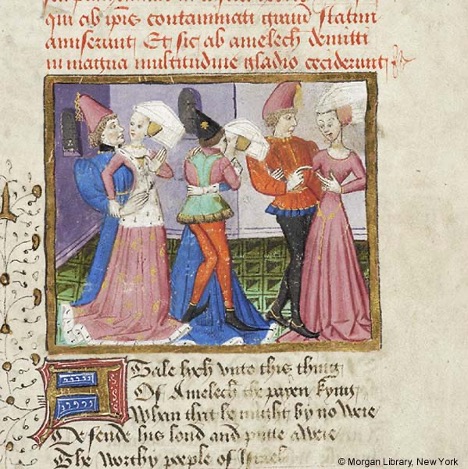
To whit, the great early medieval theologian and etymologist Isidore of Seville (c. 560 – 636) wrote of women that “[s]ome say that the name ‘female’ derives from the Greek for ‘burning force,’ because of the intensity of her desire. For the female is more lustful than the male, among women as much as among animals.”[3] Therefore if you had any hope of keeping them from having sex with a bunch of different people you were going to have to shame them into understanding themselves as part of the underclass. Personally, I don’t think there’s anything wrong with being a sex worker. And, of course, sex workers were see as a necessary and useful part of medieval society. But because they often came from the lower classes and sex was naughty there was also rather a lot of shaming them going on.
The association of women’s sexual profligacy with sex work would hold true throughout the medieval period. Brundage, in his essential Law, Sex, and Christian Society in Medieval Europe notes that Gratian, the twelfth-century Church legal scholar “defined prostitution [sic] through a citation from St. Jerome, who had emphasized the notion that the essence of prostitution lay in promiscuity, rather than in the mercenary nature of the transaction between the harlot and her client. Thus, a woman who took many lovers was a prostitute, whether she took money for her favors or not.”[4]
This did not stop at Gratian.

Legal scholars debated where the tipping point between sex worker and bad bitch lay. The Italian jurist Odofredus (d. 1265) thought that women could have one or two sexual partners, as a treat, before we started redefining them.[5] My boy, the Gratian scholar Johannes Teutonicus Zemeke (d. 1245) meanwhile variously said that a woman had to sleep with either forty, sixty, or 23,000 men before we declared her a harlot.[6] You know. Whichever.
Sometimes town governments would get in on the action as well. Savigliano in the Piedmont, for example, decided that a woman who had sex with four or more men was a sex worker; Alfambra in Aragon meanwhile said it had to be at least eleven dudes.[7]
So not only is there a concept of a body count in the medieval period, but actual theologians and town councils are keeping themselves up at night worrying about it and using it to steer Church doctrine and town planning.
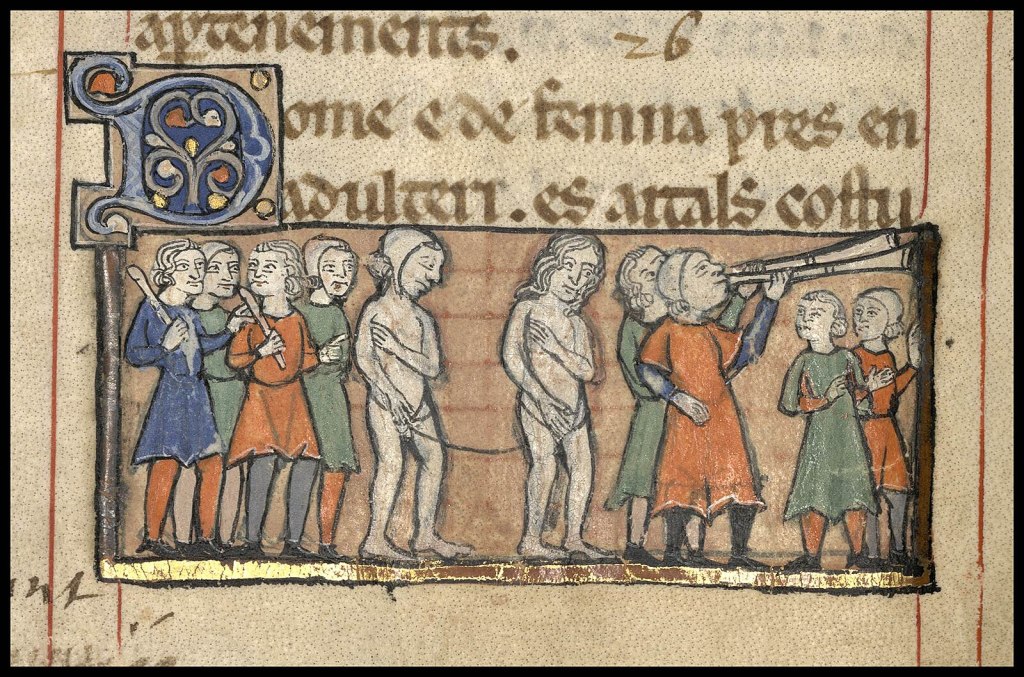
Do peasants live in cities? No. But some women might have run away from the farms they lived on to have a nice time sexing about in the city, and that’s when people start writing about them more often.
It’s also worth noting here that we see some pretty serious pushback on the part of good ol’ Johannes Teutonicus on the whole conflating casual sex with commercial sex thing. Clearly then, some theologians were still cool. It’s a mixed bag!
If you are enjoying this post, why not support the blog by subscribing to the Patreon, from as little as £ 1 per month? It keeps the blog going, and you also get extra content. If not, that is chill too.
Now not every single document that talks about people having sex is specifically talking about body count or saying people are doing sex work. We can see a lot of hand wringing about how everyone is a big old slut all over the place from the Church throughout the medieval period. The Third Council of Aachen in 862 spent a lot of time complaining about how everyone had already had sex before they got married.[8]
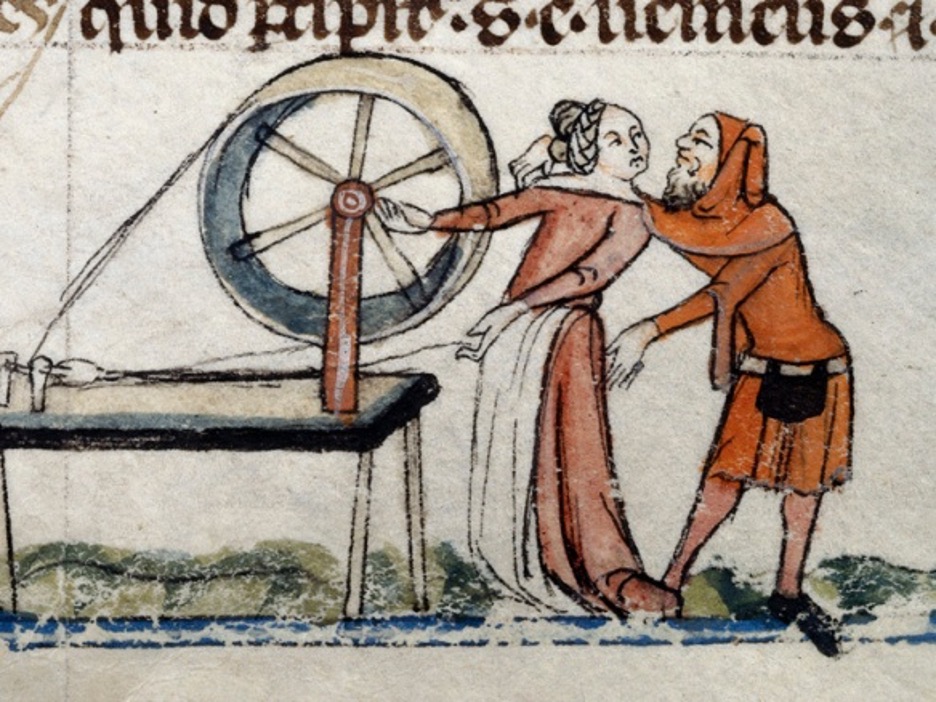
Around the same time penitentials (the handbooks for priests to use when giving out penance after confession) gave an idea of what penance unmarried people who had sex could expect. The Archbishop of Canterbury Theodore (602-690) said that free men who get down with servant girls outside marriage should fast for six months, but that can go up to a year if everyone involved is free (as opposed to being a serf).[9]
So here we see that hierarchy at play again – the fancier the woman involved, the “worse” theologians think it is. Servant girls can get off pretty light, cuz people just don’t care what they are up to as much. A bit of slutting around is a good cheap thrill for those who need it. Moreover, if you aren’t going to be commanding a dowry and doing international politics it simply doesn’t matter as much. Less well to do women are thus granted more freedom and sexual subjectivity. Good for them.
Now, idiots like the tweeter in question would probably point out that everything I have just cited means that medieval society (and ancient society for that matter) still painted all these people as sinners. And sure, that’s true. Their concern is stopping all of this slutting about. However, the fact that they are sitting around thinking and complaining about, and compiling limits to sluttiness means that there was rather a lot of it about! The Church wouldn’t have to be toting up everyone’s body count if being fun and flirty with it wasn’t common.
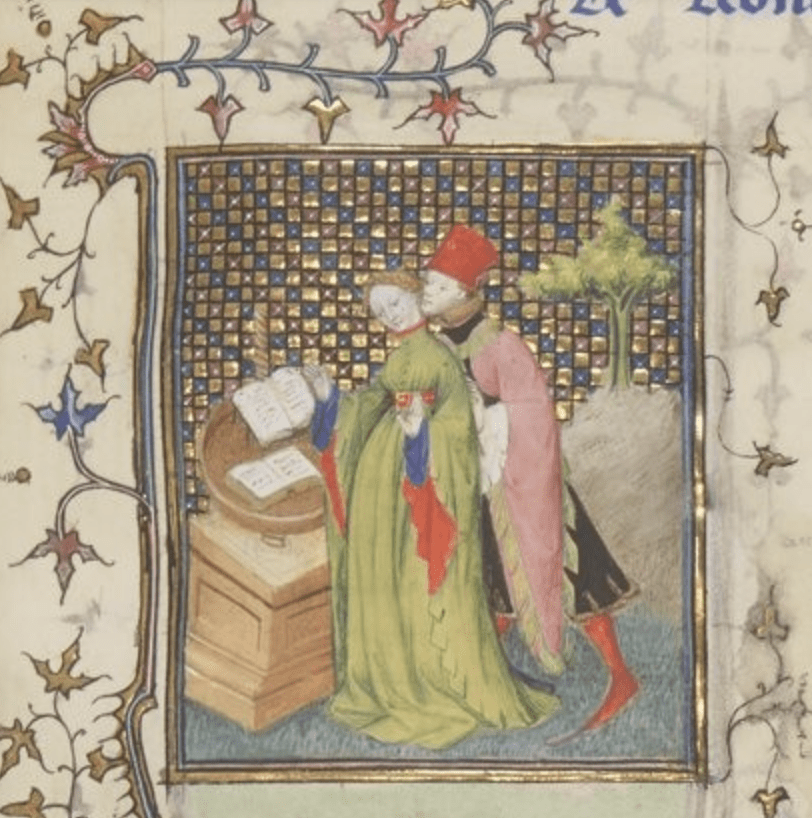
And we need to look to negative witnesses like this for information on promiscuity among the non-literate classes because they can’t write down what they were up to for us. They can’t read or write, and they are sort of busy bringing in the harvest. Also, they have a date later, so.
However, the later we get in the medieval period the more we get to hear from ordinary people about having sex for fun. This is a function of the fact that it is easier to lose sources from a long time ago, and also as the medieval period goes on, more ordinary folks have money and have learned to write. And in some cases, they could hire people to write it down for them.
One of the more annoying women to ever live, the late grate Margery Kempe (c. 1373-1438) is one such example. Now, she wasn’t a peasant. She was instead a merchant, and in theory that meant she should have been more restrained than those out in the country. Margery’s whole deal, I would argue, is that she wanted to be a saint. She had a profound religious conversion, which mostly consisted of her crying constantly and annoying the hell out of everyone she was on pilgrimage with. But before it got to that point, she was doing the usual very religious stuff: fasting; going to church a lot; wearing a hair shirt; praying; crying just so so so much – that kind of thing.
Anyway, according to her she was then tested in the second year of her hyper-religious nonsense when “a man whom she loved well, said unto her on St Margaret’s eve before evensong, that for anything, he would lie by her and have his lust of his body, and she should not withstand him, for if he did not have his will that time, he said he would anyhow have it another time, she should not chose.” This made Margery mad horny. She couldn’t concentrate on evensong. Afterwards, “she went up to the man aforesaid, so that he could have his lust, as she thought he had desired”.[10]
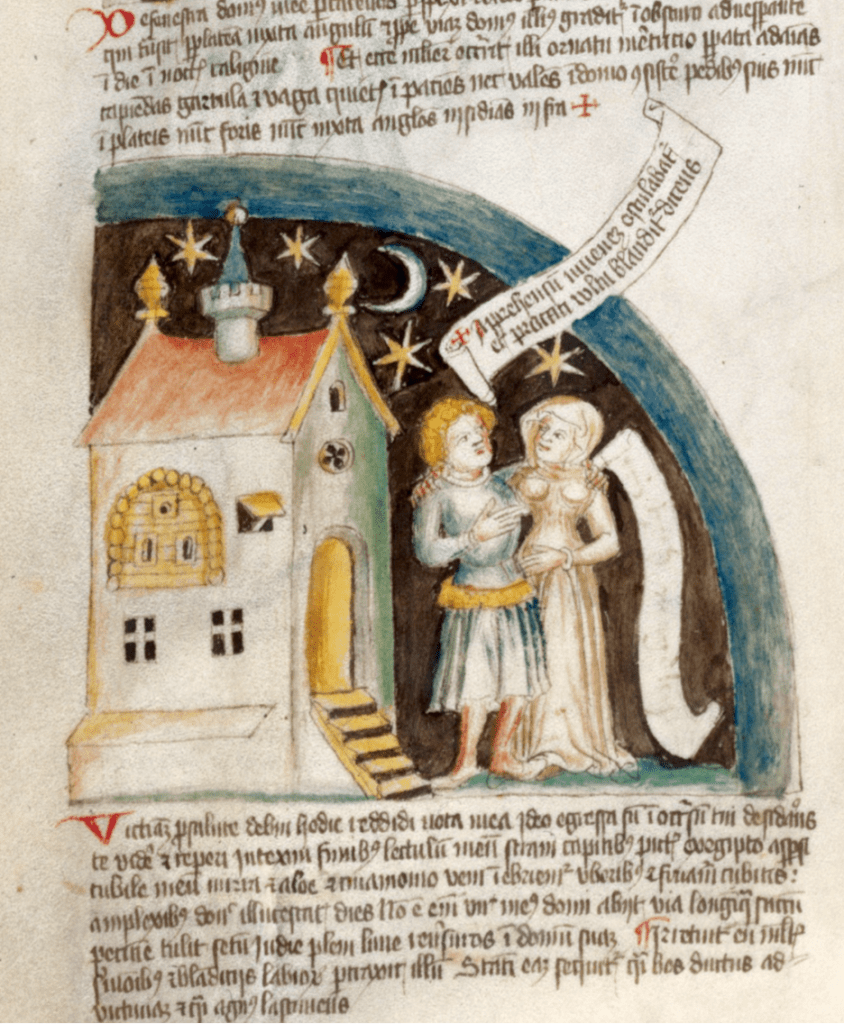
Spoiler: after Margery said she was DTF the guy changed his mind. So, she was just horny and also hated herself for being lustful, which is a bit sad. (Dudes, do not do this!) Now, I cannot stress enough how Margery was a dyed in the wool God-botherer, and even she was ready for a little easy sex after church. Even more – my girl was married. Didn’t stop her! She was completely up for it. And she’s meant to be a right thinking, God-loving, fancy city lady as was her God-loving city man friend.
These are the antics of the people in town who are under much more scrutiny for their sexual morality. So, if this is what is going down in Lynn, then we can extrapolate that everyone out in the fens outside the city who wasn’t dictating an autobiography in the hopes of gaining sainthood was, in fact, even more up for it. And we absolutely see that from colloquial sources that survive as well.
The bawdy fifteenth-century English song “A Servant Girl’s Holiday” talks about going out on a date and then having sex in a field:
“Jack will pay for my share
On Sunday at the ale-feast;
…
Soon he will take me by the hand
And he will lay me on the ground
So that my buttocks are in the dirt
…
In he thrust and out he drew
And ever I lay beneath him”[11]
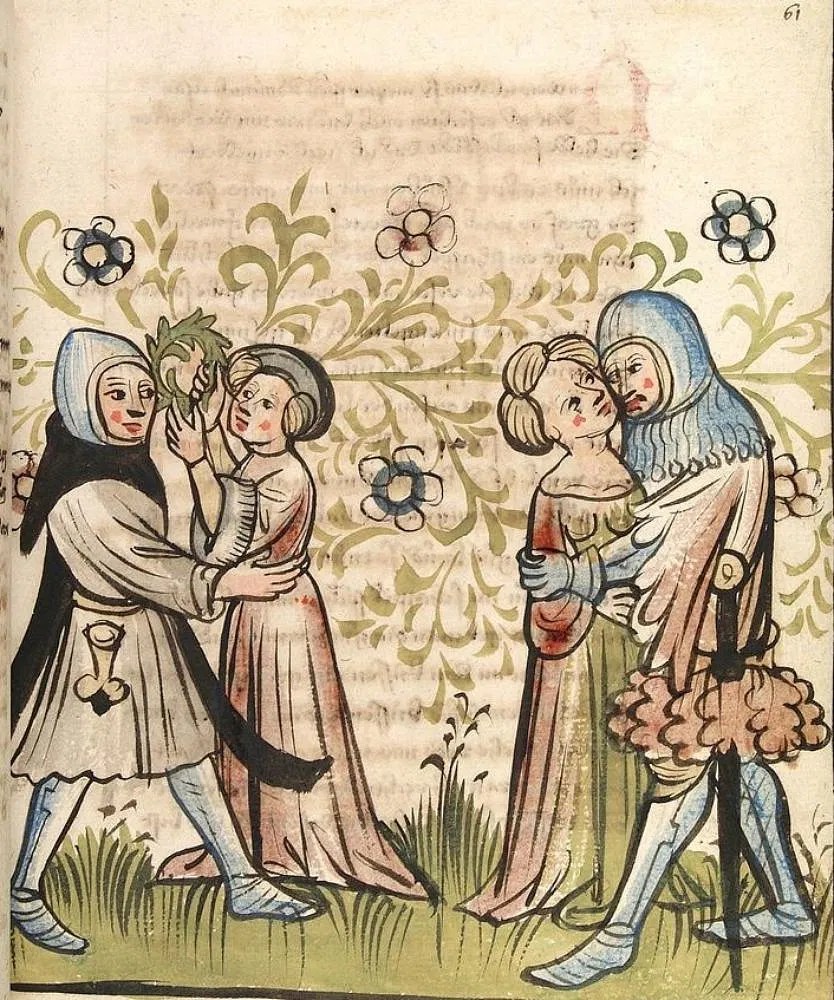
This, then, is the sort of behaviour that medieval people expected peasants to be getting up to. It’s all ale fests and al fresco sex, then singing a little song about it. I love that for them.
None of this should be surprising to anyone who took more than five seconds to think about sexuality, of course. However, there remains a pervasive desire on the part of reactionary chuds to relate to the past – and the medieval period in particular – as a blank canvas onto which they can project anything they want. They can get away with this sort of idiocy because we just aren’t taught enough about the medieval period. And we certainly aren’t taught enough about the history of medieval sex, because sexuality is still treated as an unserious subject.
I’m doing my best out here to change that and make sure that everyone knows that peasants were, in fact, up for it. It’s what they would have wanted.
[1] Check out Plato’s Republic on this one, particularly 458C-E. For Aristotle’s nonsense you can see his Rhetoric, especially 1.11.137.
[2] Adhémar Esmein, Le mariage en droit canonique, Vol 1, (New York : Burt Franklin, 1968), pp. 105-106.
[3] Isidore of Seville, Etymologiarum sive originum, ed. W. Lindsay, (Oxord: Oxford University Press, 1911), Book 11, 2:24.
[4] James A. Brundage, Law, Sex, and Christian Society in Medieval Europe, (Chicago and London: University of Chicago Press, 1987), p. 248.
[5] Odofredus, Lectura super Digesto novo ( Forni, 1968) 23.2.43
[6] Johannes Teutonicus, Glos. Ord.to D. 34 c. 16 v quae multorum and D. 45c. 9 v. paucorum.
[7] Statua civitatis Cremonae (Cremona: Apud C. Draconium & P. Bozolam et socios, 1578), p. 40; Rafael de Ureña Smenjaud (ed.) Fuero de Cuenca, (Madrid: Tipografia de Archivos, 1938), p. 238.
[8] Mansi 15: 625.
[9] Theodore, in Arthur West Hadden and William Stubbs (eds.), Councils and ecclesiastical documents relating to Great Britain and Ireland, Vol. 3 (Oxford: Clarendon Press, 1869-1878), p. 188.
[10] W. Nutler-Bowdon (ed.) The Book of Margery Kemp: A Modern Version, (London and Toronto: Oxford University Press, 1936), p. 19. You can read the whole thing here.
[11] “A Servant-Girl’s Holiday”, in, The Oxford Book of Medieval English Verse. Eds. Ceila Sisam and Kenneth Sisam, (Oxford: Clarendon Press, 1970), pp. 452-454. Following Ruth Mazo Karras’s modernization in Sexuality in Medieval Europe: Doing Unto Others, Third Edition, (London and New York: Routledge, 2017), p. 134.
For more on medieval sexuality see, IDK man, like the entire blog and also my book? But try:
On obscenity and modernity
On nobility, courtship, moral justifications and sexy tapestries
On medieval kink, parts 1 and 2
On sex, logic, and being the subject
On women, pleasure, and semen
Support the blog by subscribing to the Patreon, from as little as £ 1 per month! It’s the cool thing to do!
My book, The Once And Future Sex: Going Medieval on Women’s Roles in Society, is out now.

© Eleanor Janega, 2025

 Going Medieval
Cool! Of course they were not so different, only perhaps more busy to get on with it as mortality was higher.
Btw, as the platform is now X, shouldn’t a post there be called a xeet?
LikeLike